Saied's partnerships with Algeria and Iran have narrowed Tunisia's diplomatic room as vacant posts and conflicting policies strain ties across the Maghreb and Africa. Trade figures and migration policy show the costs.
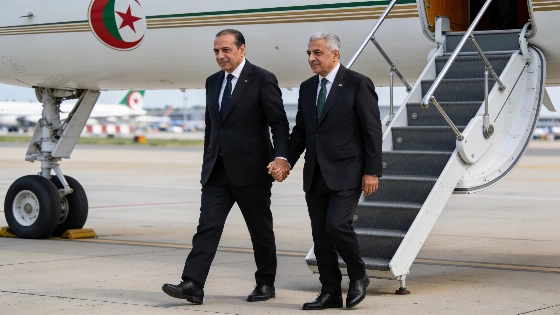
When Kais Saied stepped off his presidential plane in Algeria in October 2024, Abdelmadjid Tebboune greeted him and the two presidents walked hand in hand. The visit, Saied's first foreign trip after re-election, captured the closeness at the centre of Tunisia's regional diplomacy.
That alignment has brought costs. Tunisia's relations with Morocco have cooled, its diplomatic presence across sub-Saharan Africa has contracted, and its statements on Palestine have diverged from actions at home. Its foreign relations have increasingly centred on Algeria and, to a lesser extent, Iran.
Algeria sets the terms of a close partnership
Algeria has long been the first regional destination for newly elected Tunisian presidents, a practice dating to Zine El Abidine Ben Ali's rise to power in 1987, with Moncef Marzouki the exception. Saied's visits in 2019 and 2024 went beyond that custom. They came as Tunisia aligned with Algerian positions that strained relations with neighbouring states.
In October 2021, less than three months after Saied suspended parliament and dismissed the prime minister on 25 July, Tebboune publicly backed him. "What affects Tunisia affects Algeria," he said, adding that anyone threatening Tunisia's security "will find Algeria lying in wait." Security cooperation has accompanied Algerian economic support. Algeria provided Tunisia with a $300 million loan in 2021 and, in 2022, a further $200 million loan and a $100 million grant.
The security dimension was visible when Tunisia handed over Algerian opposition figure Slimane Bouhafs in 2021. He had been abducted from his Tunis home on 25 August and forcibly deported to Algeria despite having refugee status from the UN refugee agency. Algeria reopened its border with Tunisia in July 2022 after nearly two years of closure, while Tunisia handed over former intelligence chief Lazhar Loungou following questioning by Algerian authorities.
Relations again cooled in February 2023 after France's embassy in Tunis evacuated Algerian-French activist Amira Bouraoui. She had fled Algeria for Tunisia, where authorities arrested her and began extradition proceedings before France intervened. Saied dismissed Foreign Minister Othman Jerandi the next day; Algeria then tightened restrictions on Tunisians crossing the border.
Trade figures point to an unequal relationship. Tunisia's National Institute of Statistics reported that exports to Algeria fell 11 per cent in the first nine months of 2026 compared with the same period in 2025. Algeria's share of Tunisian imports stayed at about 7 per cent. Between January and April 2026, Tunisia's trade deficit with Algeria was reported at 1.57 billion Tunisian dinars, or about $520 million. Exports to Morocco also fell, by nearly 23 per cent over the first nine months of 2026.
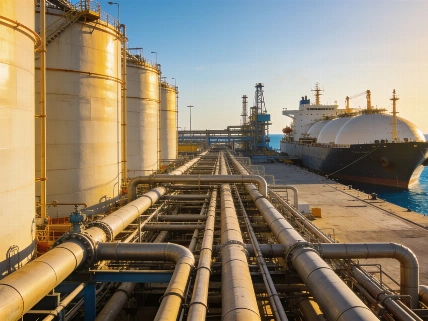
Algeria is also basic to Tunisia's energy transit infrastructure: the TransMed gas pipeline carries Algerian gas through Tunisia on its route to Italy. Tunisia reportedly receives around 5.25 per cent of the gas transported through the pipeline as a transit fee.
The Western Sahara dispute sharpened the divide. On 26 August 2022, during the Tokyo International Conference on African Development in Tunis, Saied received Brahim Ghali, leader of the Polisario Front. Morocco cancelled its participation and recalled its ambassador, viewing the reception as a departure from Tunisia's traditional neutrality; Tunisia subsequently recalled its envoy from Rabat. Since then, Tunis has aligned with Algiers on the issue as ties with Rabat have cooled.
Algeria has also promoted a trilateral summit with Tunisia and Libya. The first leaders' meeting took place in Algiers in February 2024, followed by a second in Tunis on 22 April, attended by Saied, Tebboune and Mohamed al-Menfi. Its closing statement covered security coordination and border protection alongside irregular migration and economic cooperation. The format brought together Algeria, Tunisia and Libya, without Morocco or Mauritania. Yet Tunisia's ambassadorial post in Tripoli remained vacant after the previous ambassador's term ended in 2025, while volatile security conditions and detentions of Tunisian traders and travellers have complicated movement at the basic crossing.
Algeria and Tunisia have continued formalizing bilateral cooperation through a joint commission addressing water, energy, food security, trade and border-region development. The 23rd session and an economic forum were held in Tunis in December 2025; in July 2026, the two governments adopted a roadmap in Algiers for the next round of talks. They have also discussed pursuing African markets together.
Libya's wider political disputes also shape regional calculations. An eastern Libyan vote gave Ankara greater political backing in its maritime dispute with Greece, while Greece said its rights were unchanged, as a related report explains.
African identity meets a shrinking diplomatic footprint
Tunisia's 2022 constitution affirms the country's African identity. Its diplomatic footprint south of the Sahara tells a different story. A Tunisian diplomatic source said the country had only four ambassadors among 46 other countries in the region, serving in Ivory Coast, Burkina Faso, Kenya and Nigeria. In other countries where Tunisia is represented, it relies on acting chargés d'affaires; vacancies in Cameroon, Mali and Ethiopia remain unfilled.
The gap has an economic dimension. Tunisian exports to sub-Saharan Africa exceed $546 million, but a study titled "Boosting intra-African trade: Can the African Continental Free Trade Area change the equation?" estimated that Tunisia had missed 2,999 investment opportunities across 36 countries, with a total untapped value of $2.28 billion. Tunisian World Bank expert Leila Baghdadi contributed to the study.
Saied's repeated calls to seek non-traditional markets sit uneasily alongside his approach to irregular migration. In February 2023, he said migration waves were intended to "settle irregular migrants from sub-Saharan Africa in Tunisia." Attacks and expulsions followed. In the summer, police took migrants to desert areas and left them without water, drawing condemnation from rights groups, UN experts and African organisations. African countries repeatedly evacuated their citizens, while the World Bank temporarily suspended its new strategic partnership structure with Tunisia.
Palestine and Iran expose gaps between words and policy
Saied built support in the 2019 presidential race by calling normalisation with Israel "high treason." A bill to criminalise normalisation was submitted by MPs in July 2023 and sent to a plenary session for a vote that November. The session was halted and remains suspended.
During the 2 November 2023 session, Parliament Speaker Ibrahim Bouderbala said Saied had told him that passing the bill "would harm Tunisia's foreign interests, that this law falls under the category of undermining the state's external security, and that this issue had taken on an electoral character, nothing more and nothing less." The remarks came less than a month after lawmakers' seats were draped in Palestinian flags following Operation Al-Aqsa Flood on 7 October.
Tunisia issued a statement condemning the killing of Hamas political bureau chief Ismail Haniyeh in July 2024. It did not condemn the killing of Hezbollah Secretary-General Hassan Nasrallah, instead denouncing Israeli aggression against Lebanon. Saied also missed the extraordinary Arab summit on Gaza held in Cairo on 4 March 2025.
Iran became a more prominent partner after Saied visited Tehran in May 2024 to offer condolences following President Ebrahim Raisi's death. It was the first visit by a Tunisian president since 1979. Tunisia later lifted visa requirements for Iranians. In 2025, it twice condemned US and Israeli attacks targeting Tehran. By mid-2026, its Foreign Ministry was condemning attacks on Arab states including the UAE, Qatar and Saudi Arabia without explicitly naming Iran.
Saied's use of the Palestinian cause has also collided with domestic policy. After allowing a maritime flotilla seeking to break the siege of Gaza to sail from Tunisian shores, police arrested Tunisian leaders of the Steadfastness Flotilla in March 2026. In September, they detained 15 people at a march supporting those leaders.