
Spanish and Libyan business leaders are accelerating commercial ties with a multisector mission in Tripoli, leveraging direct air connectivity and targeted B2B meetings to unlock new trade and investment opportunities across food, tobacco, and electrical sectors.
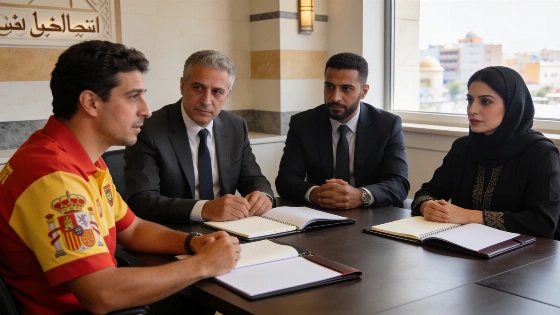
Direct flights between Tripoli and Madrid are no longer just a logistical upgrade-they are now the backbone of a rapidly intensifying commercial relationship between Spain and Libya. This week, Spanish executives landed in Tripoli, not for ceremonial handshakes, but for a tightly scheduled series of business-to-business meetings designed to convert diplomatic momentum into concrete deals.
The Tarragona Chamber of Commerce, with backing from the Economic and Commercial Office of the Embassy of Spain in Libya and the Tripoli Chamber of Commerce, is orchestrating this multisector mission from 6 to 9 September. The Spanish delegation is not limited to one industry: food, tobacco, and electrical equipment companies are all represented, each seeking to carve out a foothold in a market that has become a magnet for European interest.
Strategic Moves and Institutional Backing
This is not a one-off experiment. The mission builds on the Spanish-Libyan Business Forum held in Madrid last April, where the Spanish Chamber of Commerce and the General Union of Libyan Chambers of Commerce, Industry and Agriculture drew a strong turnout from both sides. That event signaled a shift from cautious exploration to active pursuit of joint ventures and sectoral partnerships.
Libyan and Spanish institutions are now working in tandem to identify synergies and complementary expertise. The Tripoli Chamber of Commerce, in particular, has been aggressive in courting Spanish investment, as detailed in recent coverage. The current mission is the second consecutive year of such engagement, underscoring a deliberate strategy rather than a diplomatic gesture.
Winners, Losers, and the Real Stakes
For Spanish companies, Libya offers a rare combination: a market hungry for imports and a government eager to diversify its economic partnerships beyond traditional suppliers. For Libyan firms, the influx of Spanish expertise and products promises not just new goods, but access to European standards and networks. The winners will be those able to move quickly and adapt to the realities of Libya's evolving business environment. The losers? Any competitor-local or foreign-who underestimates the speed at which these bilateral ties are being institutionalized.
What sets this initiative apart is its operational seriousness. The direct air link is not a symbolic ribbon-cutting; it is a calculated move to reduce friction for business travelers and accelerate deal flow. The business-to-business meetings are structured to produce actionable outcomes, not just photo opportunities. Both sides are betting that this formula will yield more than just memoranda of understanding-it will deliver contracts, investment, and a new layer of economic interdependence.
Spain's approach to Libya is no longer tentative. With institutional support, sectoral diversity, and logistical infrastructure now in place, the Spanish-Libyan commercial corridor is moving from aspiration to execution. The real test will be whether these missions translate into sustained trade volumes and joint projects, but the current trajectory leaves little doubt: the era of passive engagement is over, and those who hesitate will be left behind.