
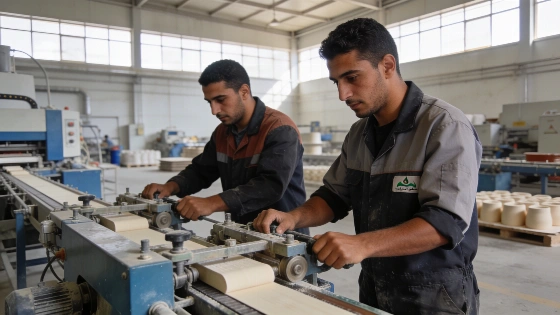
Algeria's push to diversify away from oil and gas is showing early momentum in industry and mining, yet the country's public finances remain exposed as energy revenues falter and the budget deficit widens beyond 10 percent of GDP.
Algeria's public finances are under mounting pressure as the country's decades-long dependence on oil and gas collides with the reality of a global energy transition. Despite government efforts to expand industry, agriculture, services and mining, the state's fiscal position remains tethered to volatile hydrocarbon revenues. The International Monetary Fund reports that Algeria's budget deficit has now surpassed 10% of GDP, while public debt has climbed above 50%-a stark warning for a government seeking to chart a new economic course.
Non-hydrocarbon sectors are growing, but not fast enough to fill the gap. In 2024, non-oil activity expanded by 4.8%, and the first half of 2025 saw growth accelerate to 5.4%. The government has prioritized agri-food, manufacturing, infrastructure and mining, aiming to attract private capital and boost non-hydrocarbon exports. Yet, oil and gas still account for the overwhelming majority of export earnings and state revenue, leaving Algeria exposed to any downturn in global energy prices.
Private investment and export drive face structural headwinds
Officials have repeatedly called for a shift toward private sector-led growth, but entrenched bureaucracy and regulatory uncertainty continue to deter investors. The government's push to expand mining and manufacturing is visible in new project announcements and policy incentives, but the scale of transformation remains limited. As highlighted in recent reporting, foreign partners are eyeing opportunities in Algeria's evolving non-oil sectors, but the pace of diversification is still outstripped by the country's fiscal needs.
Efforts to increase non-hydrocarbon exports have produced incremental gains, but the economy's core structure remains unchanged. Any significant drop in oil or gas prices immediately reverberates through public finances, forcing the government to weigh spending cuts or new borrowing. The IMF's latest figures underscore the urgency: with the budget deficit above 10% of GDP and debt breaching the 50% threshold, Algeria's fiscal room for maneuver is narrowing.
Energy transition accelerates the urgency for reform
The global shift away from fossil fuels is not a distant threat-it is already reshaping Algeria's economic landscape. As international demand for hydrocarbons plateaus or declines, the country's reliance on energy exports becomes a strategic liability. The government's diversification agenda is no longer a matter of long-term planning but an immediate necessity to safeguard economic stability and social cohesion.
Algeria's leadership faces a dual challenge: accelerate the transformation of its economic base while managing the fiscal fallout from any downturn in energy markets. The early signs of growth in non-oil sectors are real, but they remain insufficient to offset the scale of hydrocarbon dependence. Without deeper structural reforms and a credible path to private investment, the risk is that diversification remains more slogan than substance-leaving Algeria vulnerable as the world moves beyond oil and gas.