
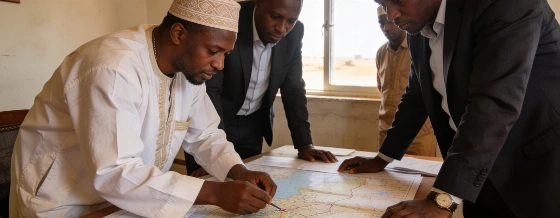
Mauritania's Brakna regional border management commission has assessed ongoing challenges in securing border areas, improving coordination among stakeholders, and monitoring local committees, as part of efforts to address cross-border risks and societal threats.
The regional border management commission of Brakna, Mauritania, convened this week to evaluate the current state of border security and the effectiveness of measures aimed at countering activities considered foreign to local society. The session, chaired by Wali Tayeb Ould Mohamed Mahmoud, focused on reviewing the commission's progress and identifying persistent challenges in safeguarding the region's frontiers.
According to the wali, the commission is prioritising enhanced coordination among all relevant stakeholders involved in border management. Special attention is being given to vulnerable zones, with efforts to involve local actors in shaping border-related policies. The commission also monitors the activities of village-level committees, compiling regular reports to inform higher authorities and strengthen oversight of border operations.
Focus on Local Engagement and Policy Implementation
Officials highlighted the importance of integrating local communities into the border management process. By tracking the work of village committees and sharing findings with decision-makers, the commission aims to improve the performance of those responsible for frontline security and ensure that policies are responsive to on-the-ground realities.
Decentralisation and Next Steps
Looking ahead, the commission plans to hold upcoming meetings in various riverbank districts, aligning with Mauritania's broader decentralisation strategy. This approach is intended to bring monitoring mechanisms closer to sensitive border areas and foster more direct engagement with local stakeholders.
The Brakna commission's approach reflects a wider trend in Mauritania, where regional authorities are increasingly tasked with evaluating and improving public sector performance. For example, a recent review of health sector operations in Assaba similarly focused on identifying gaps and implementing corrective measures at the local level.