
The Health Sector Movement Union has escalated its protest against the Tripoli government's decision to hire 200 Syrian medical professionals on high US dollar salaries, warning this move could accelerate the loss of Libyan healthcare talent and further destabilize the sector.
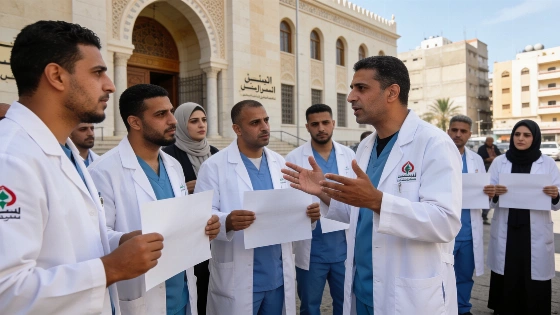
Libya's healthcare sector faces a new flashpoint as the Health Sector Movement Union accuses the Tripoli government of undermining local professionals by recruiting foreign medical staff on lucrative contracts. The Union, which has maintained a permanent demonstration outside the Prime Minister's Office, claims the government's latest hiring drive risks deepening the crisis of talent flight and service deterioration.
At the heart of the dispute is a government contract with a recruitment company to bring in 200 Syrian medical and paramedical workers-125 nurses and 75 doctors-on monthly salaries ranging from $2,000 to $3,200, all paid in US dollars. The Union points out that these figures far exceed the current pay for Libyan staff, with consultants set to receive $3,200 and third-level physicians $2,000, creating a stark pay gap that Libyan professionals say is unsustainable.
Union Demands and Salary Disparities
The Health Sector Movement Union has not been silent. Its members have demanded a new salary scale starting at 2,367 Libyan dinars for entry-level staff and rising to 15,720 dinars for the most senior positions, alongside activation of bonuses to match the rising cost of living. Instead, the government's move to import foreign staff at rates reaching up to 30,000 dinars per month has been met with outrage from local professionals who see their own demands sidelined.
Union leaders argue that this policy not only marginalizes national cadres but also incentivizes Libyan doctors and nurses to seek opportunities abroad, accelerating the very brain drain the sector can least afford. The Union's warnings are not theoretical: Libya's health system has already suffered from years of underinvestment, political instability, and the outflow of skilled personnel.
Strategic Risks for Libya's Health System
By prioritizing foreign recruitment over domestic retention, the Tripoli government risks further eroding the credibility and capacity of public health institutions. The Union's protest is not an isolated event; it reflects a broader pattern of frustration among Libyan professionals who see government resources diverted to imported solutions rather than invested in local talent and infrastructure.
This is not the first time Libya has looked abroad for healthcare support. As reported earlier, the country has recently signed agreements to access Japanese medical technology and training, signaling a wider trend of seeking external fixes for systemic problems. But the Union's current standoff with the government exposes the limits of such strategies when domestic staff feel abandoned.
Libya's health sector cannot afford to alienate its own workforce while offering premium contracts to foreign recruits. The government's approach signals a lack of confidence in national capacity and risks institutionalizing a two-tier system that rewards outsiders while neglecting those who have kept the sector afloat through years of crisis. Unless Tripoli reverses course and prioritizes investment in its own professionals, the exodus of Libyan talent will only accelerate, leaving the country's healthcare system even more vulnerable to collapse.