
Tunisia's food trade surplus reached 983.1 million dinars in the first eight months of 2026, driven by a sharp rise in olive oil exports, even as the country's overall trade deficit continued to grow.
Tunisia's food sector stood out in 2026, posting a surplus of 983.1 million dinars by August-the highest in years-largely thanks to booming olive oil exports. While most of the country's trade accounts slipped further into deficit, food exports managed to grow, according to ONAGRI data published in September and confirmed by the Ministry of Agriculture. The National Institute of Statistics (INS) also backed up these numbers, pointing to the food sector's resilience despite wider economic pressures.
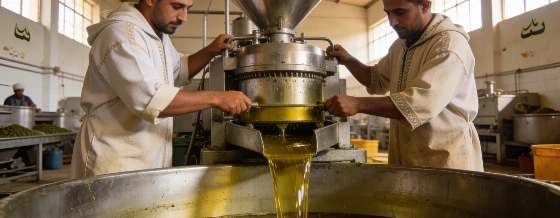
Olive oil was the main driver. Export revenue for olive oil jumped 39.5 percent year on year, reaching 3,769.7 million dinars, even though average prices fell 2.5 percent to 12.51 dinars per kilogram. This means the increase came from higher volumes, not higher prices. ONAGRI's figures suggest shipped volumes rose by about 43 percent, though the bulletin did not give a direct volume number. According to Tunis Afrique Presse (TAP), olive oil remains Tunisia's top agricultural export and a key source of foreign currency.
Food sector outpaces national trade performance
Food is the only major sector where Tunisia runs a trade surplus. The food coverage ratio-the share of imports covered by exports-rose to 119.3 percent from 115.8 percent a year earlier, according to ONAGRI. Meanwhile, the country's overall trade deficit widened to 17,853.8 million dinars by the end of August, up from 14,639 million in 2025, based on INS data and the official TAP bulletin. Energy imports alone made up a deficit of 8,930.2 million dinars, nearly matching the non-energy deficit of 8,923.7 million dinars, showing the weight of both energy and non-energy trade gaps.
Food exports rose 20.7 percent in value over the eight months, while imports increased 17.1 percent. On the import side, cereals were mixed: the value of cereal imports rose 13.2 percent, but this hid a larger physical import bill, as prices for durum wheat, soft wheat, and maize all fell, while barley edged up. The food balance remains sensitive to swings in both oil and grain markets. The Ministry of Trade and Export Development has stressed the need to diversify export markets and improve food security to manage these risks.
European market concentration and future risks
The European Union took in 70.2 percent of Tunisia's total exports, according to INS, making the country's olive oil sector heavily dependent on a single market. This setup brings both opportunity and risk: a strong olive oil season can help offset the energy deficit, but a drop in Mediterranean prices or a spike in grain import costs could quickly shrink the surplus. The September ONAGRI bulletin will be the next indicator, as autumn usually brings lower oil shipment volumes. Regional observers, including the Maghreb Arab Press (MAP), have noted similar export concentration risks in Morocco's agri-food sector.
While Tunisia's food sector performed well, the broader trade picture remains difficult. Overall export coverage fell to 71.4 percent from 73.9 percent, as imports grew 11.6 percent to 62,525.4 million dinars, outpacing export growth of 8 percent to 44,671.6 million. The food surplus, confirmed by both INS and ONAGRI, stands out against deficits in energy, raw materials, equipment, and consumer goods. Reuters and regional analysts have pointed out that the slow pace of export growth, compared to the rapid rise in imports, is a structural weakness for Tunisia's external accounts.
Trade patterns are shifting across North Africa, with countries like Algeria also increasing food imports, as reported earlier. Tunisia's strength in agriculture-especially olive oil-offers some protection, but the country's reliance on a single commodity and market leaves it exposed to outside shocks. The African Union's Department of Economic Affairs has urged Maghreb states to boost regional trade and reduce dependence on volatile global commodity cycles.
For now, Tunisia's olive oil sector has given the national trade balance some breathing room. But with export prices already slipping and the food surplus tied to unpredictable oil and grain markets, this advantage may not last. The next ONAGRI bulletin will show whether the sector can keep up its pace as the peak oil season ends. In a year when most of Tunisia's trade accounts are deepening their deficits, the food sector's results show how much the country's economic outlook depends on commodity cycles.