Olfa Hamdi's four-year sentence and fines totaling 80,000 Tunisian dinars have renewed scrutiny of military prosecutions of civilians in Tunisia over political speech and legal work.
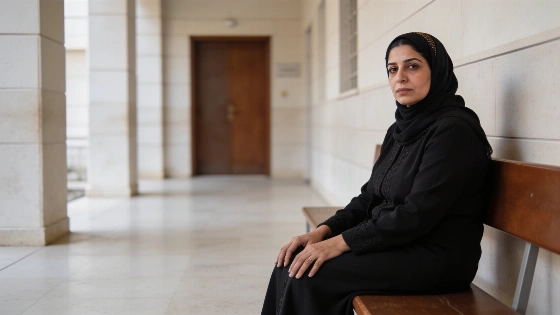
Olfa Hamdi was arrested at Tunis-Carthage Airport in February 2026 after returning from abroad. She had called for a transitional government and early presidential elections. On October 21, 2026, a military court sentenced her to four years in prison and imposed fines totaling 80,000 Tunisian dinars, about $26,000, her lawyer told Reuters.
The sentence comprised two separate two-year terms. The charges included plotting against state security and encouraging military personnel to disobey orders. Hamdi leads the Third Republic Party. Her case has renewed scrutiny of military prosecutions of civilian political figures.
How political speech reached military courts
Article 91 of Tunisia's Code of Military Justice covers offenses involving insults against the military and its leadership. Human Rights Watch has warned that criticism of the president can lead to military prosecution because he is commander-in-chief of the armed forces.
Trials of civilians in military courts predate Kais Saied's measures of July 25, 2021. Tunisian law already permitted them, and rights groups documented cases during the democratic transition. After that date, however, organizations reported a sharp rise in such prosecutions.
In November 2021, Amnesty International reported that military courts had investigated or prosecuted at least 10 civilians in the preceding three months. The organization cited Amer Ayad and Abdellatif Aloui, arrested after a television appearance criticizing the president and discussing the powers of then-newly appointed Prime Minister Najla Bouden. Amnesty assessed that their remarks contained no incitement to violence and amounted to peaceful political criticism.
Amnesty compared those cases with at least six civilian proceedings documented by human rights organizations between 2011 and 2018. That figure reflects recorded cases, not a comprehensive count of all proceedings.
Yassine Ayari's record involves two distinct matters. One concerned enforcement of an earlier military court sentence after his parliamentary immunity was lifted. A separate case followed social media posts he published in the days after July 25, 2021, which led to accusations of insulting the military.
Journalist Salah Attia was arrested in June 2022 over televised remarks claiming that the military had refused presidential orders to shut down the Tunisian General Labor Union headquarters. A military court sentenced him to three months in prison in August, according to the Committee to Protect Journalists.
Disputes over a journalist's accuracy or professional conduct do not determine which court has jurisdiction. Tunisia's Decree-Law 115 regulates freedom of expression and journalism, but authorities have largely abandoned it in published-content cases in favor of more punitive laws. Saied introduced Decree-Law 54 in September 2022, and authorities have also used it against people expressing opinions.
Saied's foreign-policy choices form another part of the political context. An earlier analysis examined their effect on Tunisia's regional influence.
Chaima Issa received a suspended one-year sentence from a military court in December 2023 over statements about the military's role in the December 2022 parliamentary elections. The charges included inciting military personnel to disobey orders and spreading false information. She was also charged with insulting the president. In October 2026, an appeals court sentenced her to six months in prison, suspended, in a separate case under Decree-Law 54. The proceedings were distinct from the civilian-court conspiracy case in which she received a 20-year prison sentence.
Lawyers and the limits of military jurisdiction
Military proceedings have also reached lawyers acting in their professional capacity. In March 2022, former Tunisian Bar Association head Abderrazak Kilani was imprisoned by order of a military court after an argument with security officers who had barred him from entering a hospital to see his client, Noureddine Bhiri. Human Rights Watch described the prosecution over the confrontation, during which Kilani criticized the president, as a troubling restriction on freedoms. His case also raised questions about lawyers' ability to reach clients and carry out their duties.
The so-called airport case began with a March 15, 2021 confrontation at Tunis-Carthage Airport. Security officers had prevented a woman from travelling. Seifeddine Makhlouf, then a parliamentarian representing the Al Karama Coalition, was there with other lawmakers. Lawyer Mehdi Zagrouba had arrived to assist the woman, according to the International Commission of Jurists.
Although the incident preceded July 25, military proceedings against the lawmakers began after parliament was suspended and members lost their immunity. On January 20, 2023, the Military Court of Appeal increased the sentences: Makhlouf received one year and two months in prison, while Zagrouba received 11 months and a five-year ban on practising law.
Amnesty International and the International Commission of Jurists documented convictions that included insulting public officials and disturbing public order. Zagrouba was also convicted of assaulting officials in the performance of their duties. Amnesty called for the military rulings to be overturned, arguing that criminal charges alone do not justify trying civilians in military courts.
The International Commission of Jurists also raised concerns about double jeopardy. Civilian courts had already examined the airport incidents and issued rulings, it said. Retrying defendants for the same acts, alongside a ban on a lawyer's practice, violated fair-trial guarantees.
Lawyer and former parliamentarian Béchir Chebbi was referred to military justice in November 2021. The charges included insulting the president and undermining the armed forces' dignity and morale. Lawyer Mokhtar Jemaï told Ultra Tunisia that the referral was also linked to Chebbi's defence work before military courts and a complaint he had filed against Saied.
In February 2022, the Permanent Military Court in Tunis sentenced Chebbi in absentia to eight months in prison for undermining military morale and inciting disobedience against senior military commanders. Lawyers Without Borders documented the prosecution under Article 91 and warned against using military courts to intimidate political opponents or restrict expression.
Jurisdiction and fair-trial concerns
Amnesty International has questioned the appointment of military judges and prosecutors. It has also raised concerns about the military justice system's ties to the executive branch. The organization says these arrangements undermine fair-trial guarantees and has called for military courts' criminal jurisdiction to be limited to military personnel accused of breaches of military discipline.
The cases differ in their allegations and defendants, but share a central procedural issue: whether civilian speech and conduct should be tried in a military forum. The record includes political remarks and a journalist's broadcast, alongside lawyers' work. Human rights organizations have challenged military courts' jurisdiction over civilians even when the charges describe recognized criminal offenses.