Amen Invest says the draft budget needs more than TND 28 billion in Treasury financing. Heavy domestic borrowing could squeeze credit for businesses and households.
TND 28.122 billion is the amount Tunisia's Treasury would need to raise under the 2027 draft budget, nearly twice the projected deficit.
Stockbroker Amen Invest laid out the figures in a LinkedIn post and warned that the financing need would put sustained pressure on the country's financial system. More than 70% of the total is set to come from domestic borrowing.
The draft sets expenditure at TND 68.895 billion, up 8.37% from the TND 63.575 billion in the 2026 Finance Law. Revenue is projected at TND 54.28 billion. Tax receipts are expected to contribute TND 49.6 billion, according to Tunisienumerique.
Debt repayments widen the funding gap
The projected deficit is TND 14.615 billion, or around 8.5% to 9% of estimated GDP. Amen Invest says the TND 49.6 billion in projected tax revenue will not cover operating and investment spending, despite Tunisia's continued high tax burden.
The financing requirement also includes principal repayments on loans coming due. The draft allocates TND 13.307 billion for those repayments: TND 6.823 billion on domestic debt and TND 6.484 billion on external debt, Nessma reports. Much of the borrowing would cover past obligations as well as the current deficit, rather than fund investment.
Domestic borrowing carries the main risk
The draft sets domestic borrowing at TND 19.845 billion. External borrowing is budgeted at TND 6.877 billion. Another TND 1.4 billion is expected from other Treasury resources.
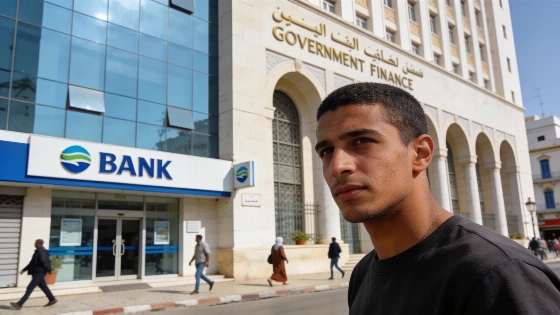
Amen Invest warns that reliance on domestic savings, mainly through the banking system, could intensify crowding out and limit credit for businesses and households. Business News says nearly three-quarters of planned debt borrowing is expected to come from the domestic market.
Amen Invest says the relatively low external borrowing figure may reflect limited access to international capital markets or dependence on bilateral and multilateral concessional financing. The availability of that financing remains uncertain.
The draft also includes a direct financing facility of about TND 9.8 billion from the Central Bank of Tunisia. Economic reporting describes the facility as interest-free, with a 15-year repayment term and a three-year grace period. Economist Ridha Chkoundali has criticized repeated direct borrowing from the central bank. He says the 2027 proposal is the fourth consecutive Finance Bill to include it.
A separate regional microfinance review covered Egypt and Tunisia's comparison of borrower safeguards and digital finance. Amen Invest's assessment instead focuses on sovereign funding and its potential pressure on the wider financial system.
Treasury resources are projected at TND 1.400 billion, leaving limited room to ease liquidity pressures through the year.