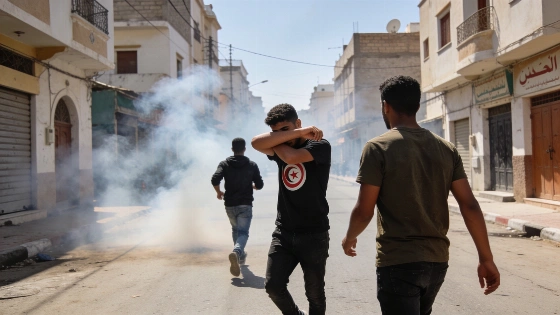
Police used tear gas after deaths linked to security actions sparked protests in several Tunisian cities. In Sfax, students blamed delayed ambulance care for a female student's death as unrest unfolds amid a wider national crisis.
In Ettadhamen, a man's death after detention on suspicion of drug dealing became the immediate trigger for road blockages and clashes with police. His family says officers used violence after detaining him and wants the circumstances clarified. Local media reported a different account: that he died after swallowing drugs.
The protests come as Tunisia faces a deepening crisis. Economic and social strains are mounting alongside political pressure, with public anger also focused on state institutions.
Deaths trigger clashes in two cities
In the suburb of Tunis, demonstrators blocked roads and burned tires. Stones were thrown at law enforcement officers. Reuters reported that security forces used tear gas while trying to secure a National Guard post in the area.
In Jebiniana, in Sfax governorate, relatives say another man died during a pursuit by security forces. Tunisian media reported that protesters set a car and tires on fire; police used tear gas during the clashes.
Students blame delayed ambulance response
Students in Sfax protested after a female student with heart problems died. Her fellow students blamed the ambulance service, saying medics arrived too late and pointing to a lack of medical facilities. They also called for a strike at the faculties of the University of Sfax on Friday.
The unrest follows a large demonstration in the capital against President Kais Saied. Thousands took part in what was described as the biggest protest in several years, accusing him of undermining democracy and mishandling the economy. A separate report on Libya covered Iran's foreign minister linking Libya's stability to peace across North Africa.
In a separate development, a military court sentenced opposition politician Olfa Hamdi to four years in prison on charges of conspiracy against state security and inciting military personnel to disobey orders.