
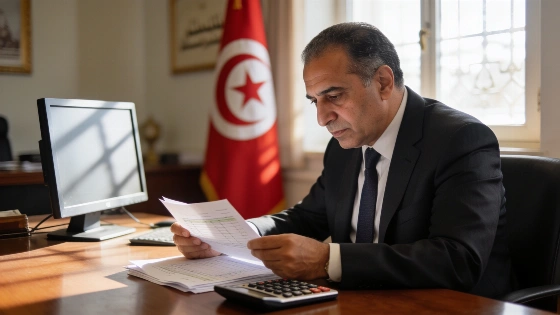
Fitch Ratings has kept Tunisia's sovereign rating at B minus with a stable outlook, highlighting the country's ability to withstand external shocks but warning of persistent fiscal deficits and mounting government debt that far exceed regional peers.
Tunisia's government has managed to avoid a downgrade from Fitch Ratings, but the cost is clear: the country's debt burden is set to climb even higher, with fiscal deficits showing no sign of meaningful reform. Fitch's decision to affirm Tunisia's Long-Term Issuer Default Rating at B minus with a stable outlook is less a vote of confidence than a recognition of the country's ability to keep paying its bills-barely-despite mounting risks.
Fitch's latest assessment lands at a moment when Tunisia's external position is holding up better than many expected, even as global energy prices and subsidy costs threaten to widen the cracks in public finances. The agency points to Tunisia's higher GDP per capita and human development indicators compared to other B-rated peers, as well as a diversified economy and an educated workforce. Yet these strengths are being steadily eroded by a government debt load projected to reach 85% of GDP in 2026-far above the 2028 B median of 55%-and a fiscal deficit forecast to hit 6.4% of GDP next year.
Debt and Deficit Pressures Outpace Regional Peers
While Tunisia's external accounts have shown resilience, the underlying fiscal picture is deteriorating. Fitch expects the current account deficit to widen to 3.9% of GDP in 2026, driven by higher energy import costs, even as olive oil exports surged 44% year-on-year in the first half of 2026 and the services sector remains robust. The deficit is projected to narrow below 2.5% by 2027 and 2028, but only if international oil prices ease as forecast.
On the fiscal side, the government's decision to increase fuel subsidies by 0.8 percentage points is set to push the deficit well above the B-rated median. Fitch is blunt: it does not expect any meaningful fiscal reform, and consolidation of current expenditures-especially the wage bill-has effectively ended. The central bank's role has become more pronounced, with zero-interest loans of TND7 billion in 2024 and a further TND11 billion planned for 2026, raising questions about the sustainability of such interventions.
External Payments Met but Risks Remain
Despite these pressures, Tunisia managed to fully repay its only outstanding EUR700 million Eurobond maturing in July 2026, thanks to central bank support. This repayment has helped maintain the country's external credibility for now, but with 40% of total government debt denominated in foreign currency, Tunisia remains highly exposed to exchange rate risk and global market volatility.
Inflationary pressures are expected to remain contained, with average inflation projected to rise moderately to 5.7% in 2026 before easing to 5% through 2028-well below the 8.3% average seen between 2022 and 2024. Real GDP growth, however, is forecast to average just 2% over the next three years, offering little hope for a rapid fiscal turnaround.
Regional Context and What to Watch
Tunisia's fiscal and external challenges are not unique in North Africa, but the scale of its debt and the lack of credible reform set it apart. As regional governments pursue ambitious development projects-such as Mauritania's push for 10,000 new agricultural jobs, reported earlier-Tunisia's room for maneuver is shrinking. Investors and policymakers will be watching closely for any sign of renewed fiscal discipline or external support, but for now, the country's sovereign risk profile remains firmly anchored at the lower end of the scale.
Fitch's stable outlook is a warning disguised as reassurance. Tunisia's ability to meet its external obligations has bought time, but without structural reforms or a credible plan to rein in deficits and debt, the country is simply treading water. The government's reliance on central bank financing and subsidies may stave off immediate crisis, but it does nothing to address the underlying vulnerabilities. Unless Tunisia's leadership confronts these fiscal realities head-on, the next ratings review may not be so forgiving.